Fuel Type in Patio Heaters: What It Is and Is It Worth It?
As an Amazon Associate we earn from qualifying purchases. Links on this page are affiliate links.
Fuel Type Explained for Heaters
The fuel type is the energy source a patio heater uses to generate heat. This spec determines how you power the unit and where you can place it. Understanding this difference helps you choose the right model for your space. We break down each option below so you can decide what fits your needs.
Electric heaters plug into a standard outlet or require a dedicated circuit. They produce no emissions and need no ventilation. You simply connect the power cord and turn it on. This makes them ideal for balconies, indoor patios, or areas with strict air quality rules. However, they are limited by the length and reach of your power source.
Propane heaters use portable tanks. They offer full portability since you do not need a fixed line. You swap empty tanks for full ones when the fuel runs low. This type is popular for events or temporary setups. Be aware that you must store propane tanks safely and replace them regularly.
Natural gas heaters connect to your home’s existing gas line. They provide continuous heat without manual refueling. Installation requires a professional to run a gas line to your patio. This option is best for permanent structures like covered patios or gazebos. You get consistent heat without the hassle of tank changes.
Wood burning heaters use logs or kindling. They produce a classic ambiance with real flames. You must manage the fire, add wood, and clean out ashes. These units are heavy and require a non-combustible surface. Check local fire codes before using them.
Wood pellet heaters burn compressed biomass pellets. They are more convenient than logs but still require manual refilling. Pellets are stored in a hopper and fed into the fire automatically in some models. They offer a clean burn compared to raw wood. Choose this if you want the look of fire without constant tending.
The fuel type explained helps you weigh convenience against performance. Consider your installation options and local regulations. Match the power source to how often you use your patio.
Patio Heater Fuel Types Compared
Electric
Electric heaters plug into standard outlets or require dedicated circuits. They produce no emissions and operate silently. This makes them ideal for covered patios or areas where ventilation is limited. You get instant heat with no startup delay. However, you are tethered to power sources, which limits placement. Portability is also restricted by cord length. The DR. Infrared 41-Inch 3000W model exemplifies this category. It offers high output for commercial or residential covered spaces. It requires a 220V connection, so you must have the proper wiring installed. If you value clean operation and convenience over raw power, electric is a strong choice. The trade-off is your dependence on electrical infrastructure.
Propane
Propane heaters burn liquid petroleum gas stored in tanks. They provide high heat output and are fully portable since they do not need wiring. You can move them anywhere on your patio. The Amazon Basics 46,000 BTU model shows this flexibility. It includes wheels for easy transport. Propane works well in open areas where ventilation is not a concern. You must monitor fuel levels and replace tanks when empty. This adds a maintenance step compared to electric units. The heat is immediate and powerful. However, you deal with gas lines and potential leaks if not maintained. If you need strong, movable heat without electrical upgrades, propane fits your needs. The main drawback is the ongoing need to manage fuel supplies.
Natural Gas
Natural gas heaters connect directly to your home’s gas line. They offer continuous heat without tank refills. This setup is permanent and requires professional installation. You cannot move the unit once installed. The Brown Telescopic model illustrates this fixed nature. It suits spaces with existing gas infrastructure. You get steady, reliable warmth without interruption. The trade-off is the lack of mobility. You must plan your patio layout around the gas line location. Installation costs can be higher upfront. However, you avoid the hassle of storing heavy propane tanks. If you have a gas line and want a permanent heating solution, this is practical. You sacrifice portability for convenience and unlimited fuel access.
Wood Burning
Wood burning heaters use logs as fuel. They create a traditional ambiance with visible flames. Heat output can be significant, but it requires manual feeding. You must manage ash and soot regularly. These units are often heavy and stationary. They require a non-combustible base and clearances from flammable materials. Ventilation is critical to prevent carbon monoxide buildup. You cannot use them in enclosed or semi-enclosed spaces safely. The fire needs constant attention to maintain temperature. If you value the aesthetic of a real fire and have a large, open yard, this works. The trade-off is the labor involved in maintaining the fire and cleaning the unit. It is less convenient than automated options.
Wood Pellet
Wood pellet heaters burn compressed biomass fuel. They offer higher efficiency than traditional wood logs. Many models include automated feeders and blowers for consistent heat. The HEATAK 70K BTU model provides intense warmth for large areas. You still need to refill the hopper, but less frequently than adding logs. Ash production is lower than raw wood. These units are heavier and require electrical power for fans and controls. You must store pellets in a dry place to prevent clumping. Ventilation is still necessary for combustion air. If you want the look of wood fire with more control and less manual labor, pellets are a middle ground. The trade-off is the need for both fuel storage and a power source for the mechanics.
Is Fuel Type Worth Your Choice?
Who needs it
You need to focus on fuel type if your installation constraints are strict. If you live in an apartment or a condo with shared walls, electric or natural gas options are likely your only viable choices. Propane and wood-burning units often face restrictions due to open flame and smoke emissions. You should also prioritize this spec if you plan to move the heater frequently. Propane models offer true portability since they do not rely on a fixed power line or gas line. Conversely, if your patio is permanently wired for electricity or natural gas, sticking to those fuels ensures safety and convenience. Ignoring these limitations can lead to purchasing a unit you cannot legally or safely operate in your specific outdoor space.
Who can skip it
You can largely ignore fuel type if you already have the necessary infrastructure in place. If your patio is fully equipped with dedicated outdoor electrical circuits and natural gas lines, the choice becomes less about restriction and more about personal preference. In this case, focus on BTU output and heating radius instead. These metrics determine how effectively the unit warms your specific area. You might also prioritize build quality and weather resistance if you live in a region with harsh seasonal changes. The fuel source is just the energy carrier; the efficiency of the heater itself matters more for comfort. As long as you have access to the power source, the specific fuel type is a secondary consideration compared to overall performance and durability.
Fuel Type Glossary
Fuel Type
The energy source used to generate heat, such as electricity, propane, or natural gas. This choice dictates where you can place the unit and how you power it.
Wattage
The electrical power consumption rate, measured in watts. Higher wattage usually means more heat output. Check your outlet capacity to ensure it can handle the load safely.
Heat Output
The amount of thermal energy produced, often measured in BTUs for gas models. This spec indicates how effectively the heater can warm your specific outdoor area.
Mount Type
How the heater is installed, including freestanding, wall-mounted, or ceiling-hung. Your space layout and ceiling height will determine which mounting style is most practical for you.
Water Resistance
The IP rating that shows protection against solids and liquids. A higher IP code means better resistance to rain and moisture, essential for outdoor durability and safety.
Propane Tank
A portable fuel container used with gas patio heaters. These tanks provide mobility but require refilling or swapping when empty, unlike fixed natural gas lines.
Natural Gas Line
A permanent connection to your home gas supply. This option offers continuous heat without refilling tanks, but it requires professional installation and a fixed location.
BTU
British Thermal Unit, a measure of heat energy. One BTU raises one pound of water by one degree Fahrenheit. Use this to compare heating power across different models.
Quick picks
| # | Product | Best for | Price |
|---|---|---|---|
| 1 | DR. Infrared 41-Inch 3000W Patio Heater | Covered patios with 220V power | Check price of DR. Infrared 41-Inch 3000W Patio Heater on Amazon |
| 2 | Amazon Basics 46,000 BTU Propane Patio Heater | portable propane patio heating | Check price of Amazon Basics 46,000 BTU Propane Patio Heater on Amazon |
| 3 | Brown Telescopic Natural Gas Patio Heater | Permanent outdoor spaces with gas lines | Check price of Brown Telescopic Natural Gas Patio Heater on Amazon |
| 4 | HEATAK 70K BTU Wood Pellet Patio Heater | large outdoor spaces needing high heat | Check price of HEATAK 70K BTU Wood Pellet Patio Heater on Amazon |
| 5 | Hykolity 38.5" Standing Infrared Patio Heater | small patio spaces with outlet access | Check price of Hykolity 38.5" Standing Infrared Patio Heater on Amazon |
| 6 | Hykolity 50,000 BTU Propane Patio Heater | small outdoor patios and balconies | Check price of Hykolity 50,000 BTU Propane Patio Heater on Amazon |
Our 6 picks

DR. Infrared 41-Inch 3000W Patio Heater
Best for: Covered patios with 220V power
- Fuel Type
- Electric (what this guide is about)
- Heat Output
- 10,260 BTU
- Wattage
- 3000W
- Mount Type
- Wall or Ceiling Mount
- Heating Element
- Carbon Infrared
- Weatherproof Rating
- IP55
View on Amazon: DR. Infrared 41-Inch 3000W Patio Heater Affiliate link
This Dr. Infrared DR-239 is a 3000W electric infrared patio heater designed for wall or ceiling mounting. It delivers 10,260 BTU of heat using a carbon element. The IP55 weatherproof rating allows use in covered outdoor areas like patios or garages. It includes a remote control for adjusting power levels. This unit suits you if you want instant, odorless heat without the need for fuel tanks or gas lines.
Pros
- 3000W electric power with 10,260 BTU output
- IP55 weatherproof rating for outdoor use
- Includes remote control for operation
- Carbon infrared heating element
Cons
- Requires 220V-240V outlet, not standard 110V
- Limited to wall or ceiling mounting only
- Heats a smaller area than propane or gas models
Good fit if
- You have a 220V-240V electrical outlet available
- You want a permanent wall or ceiling mount
- You prefer odorless, fume-free infrared heat
Skip if
- You need a portable unit with wheels
- You only have standard 110V household outlets
- You want to heat a large open space
Verdict: Dr. Infrared 3000W Wall Mount Heater is a compact, high-output electric option for covered patios with 220V access. It fits you if you value silent, instant heat and do not need portability.

Amazon Basics 46,000 BTU Propane Patio Heater
Best for: portable propane patio heating
- Fuel Type
- Propane (what this guide is about)
- Heat Output
- 46,000 BTU
- Ignition Type
- One-touch ignition button
- Features
- Wheels
- Use
- Commercial Use
- Dimensions
- 32.1 × 32.1 × 91.3 inches
View on Amazon: Amazon Basics 46,000 BTU Propane Patio Heater Affiliate link
This Amazon Basics propane heater delivers 46,000 BTUs of heat across a 18-foot diameter. It features a one-touch ignition button and a 91.3-inch height. The unit weighs 40 pounds and includes wheels for easy movement. Its powder-coated Havana Bronze finish suits commercial and residential patios. You get adjustable temperature control and essential safety valves. It requires a separate 20-pound propane tank.
Pros
- 46,000 BTU heat output
- One-touch ignition button
- Wheels for maneuvering
- Tilt safety auto-shutoff
Cons
- Propane tank not included
- No remote control
- Manual temperature knob
Good fit if
- You need portable heat for a patio
- You want quick one-touch ignition
- You prefer propane fuel type
Skip if
- You want electric power
- You need natural gas connection
- You prefer wood burning
Verdict: Amazon Basics 46k BTU Propane Heater offers solid heat output and mobility for outdoor spaces. It fits users who value propane flexibility and easy ignition over electric convenience.

Brown Telescopic Natural Gas Patio Heater
Best for: Permanent outdoor spaces with gas lines
- Fuel Type
- Natural Gas (what this guide is about)
- Mount Type
- Freestanding
- Ignition Type
- Piezo pulse
- Construction Material
- Metal
- Use
- Backyard, Garden, Commercial Use
- Color
- Brown
View on Amazon: Brown Telescopic Natural Gas Patio Heater Affiliate link
This freestanding unit runs on natural gas, connecting via a 24-foot hose. It delivers 13KW of radiant heat with dual power settings. The height adjusts from 55 to 78.7 inches for flexible positioning. It features piezo pulse ignition and triple safety protections. You get steady warmth without swapping propane tanks. The weighted base adds stability for outdoor use.
Pros
- Adjustable height from 55 to 78.7 inches
- Includes 24-foot natural gas hose
- 13KW high power and 5KW low power modes
- Triple safety protection system
Cons
- Requires permanent natural gas connection
- Heavier build at 33 pounds
- Piezo ignition needs manual activation
Good fit if
- You have a fixed natural gas line
- You want adjustable heat height
- You prefer continuous gas supply
Skip if
- You need portable propane fuel
- You want electric plug-in power
- You prefer lightweight portability
Verdict: Natural Gas Freestanding Heater suits spaces with gas lines. You get flexible height and steady heat. It fits permanent outdoor setups well.
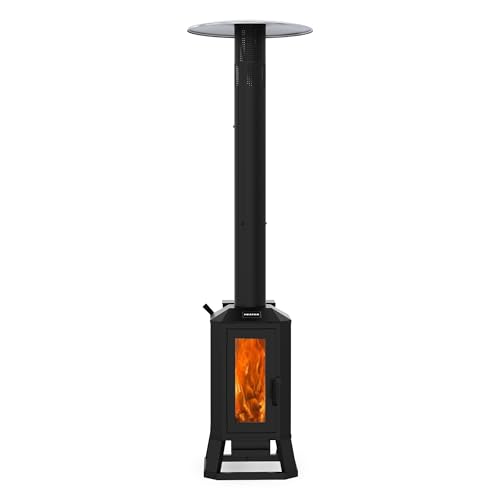
HEATAK 70K BTU Wood Pellet Patio Heater
Best for: large outdoor spaces needing high heat
- Fuel Type
- Wood Pellet (what this guide is about)
- Heat Output
- 70,000 BTU
- Ignition Type
- Match or lighter
- Construction Material
- Powder-Coated Steel
- Features
- Wheels
- Color
- Black
View on Amazon: HEATAK 70K BTU Wood Pellet Patio Heater Affiliate link
This HEATAK wood pellet heater delivers 70,000 BTU of heat, covering over 100 square feet. It features a gravity-fed 20-pound hopper for consistent, hands-free operation. The powder-coated steel body includes a glass viewing window for ambiance. Weighing 40 pounds with dual wheels, it moves easily. Manual ignition requires a match or lighter. It suits those seeking high output and visual appeal.
Pros
- 70,000 BTU heat output
- 20-pound gravity-fed hopper
- Glass viewing window
- Dual wheels for portability
Cons
- Manual match ignition
- 40-pound weight
- Large footprint
Good fit if
- You want high heat output
- You enjoy viewing flames
- You have space for a large unit
Skip if
- You need automatic ignition
- You prefer compact designs
- You want electric convenience
Verdict: HEATAK 70,000 BTU Wood Pellet Heater fits users who prioritize intense warmth and a cozy flame view over automated convenience.

Hykolity 38.5" Standing Infrared Patio Heater
Best for: small patio spaces with outlet access
- Fuel Type
- Electric (what this guide is about)
- Wattage
- 1500W
- Mount Type
- Standing
- Heating Element
- Dual carbon heating tubes
- Weatherproof Rating
- IPX4, IP44
- Features
- Tip-Over Protection
View on Amazon: Hykolity 38.5" Standing Infrared Patio Heater Affiliate link
This Hykolity standing heater uses 1500W of electric power with dual carbon tubes. It reaches 38.5 inches tall and carries an IP44 weatherproof rating for outdoor decks. The unit includes a remote and a 24-hour timer. It offers two heat levels and tip-over protection. This model suits small patios where you need portable, clean heat without fuel lines or tanks.
Pros
- 1500W dual carbon heating tubes
- IP44 weatherproof rating
- Includes remote control
- 24-hour auto shut-off timer
- Tip-over safety protection
Cons
- 1500W output is lower than propane or gas models
- Requires a dedicated electrical outlet
- Smaller coverage area than high-BTU heaters
Good fit if
- You want a clean, electric heat source
- You have an outdoor outlet nearby
- You prefer a portable standing unit
Skip if
- You need high heat for large spaces
- You lack access to electricity outdoors
- You want to avoid cords entirely
Verdict: Hykolity 38.5in Electric Infrared Heater is a compact option for small patios. It fits users who prioritize convenience and safety over raw heating power.

Hykolity 50,000 BTU Propane Patio Heater
Best for: small outdoor patios and balconies
- Fuel Type
- Propane (what this guide is about)
- Heat Output
- 50,000 BTU
- Ignition Type
- Piezoelectric
- Design
- Table
- Features
- Wheels
- Use
- Garden, Commercial Use
View on Amazon: Hykolity 50,000 BTU Propane Patio Heater Affiliate link
This Hykolity propane heater delivers 50,000 BTU of heat output for outdoor spaces. It features a piezoelectric ignition system that requires no batteries for starting. The unit stands 87.3 inches tall and weighs 32.5 pounds, with rolling wheels for easy movement. It covers up to 200 square feet. The black finish and weather-resistant design suit patios and balconies. You get steady warmth with multi-speed temperature adjustments.
Pros
- 50,000 BTU heat output
- Piezoelectric ignition with no batteries needed
- Rolling wheels for portability
- Multi-speed temperature control
Cons
- Heats only up to 200 square feet
- Heavy at 32.5 pounds
- No remote control included
Good fit if
- You need a portable propane heater for small patios
- You prefer manual ignition without batteries
- You want multi-speed heat settings
Skip if
- You need to heat large areas beyond 200 square feet
- You require battery-free operation with electric ignition
- You want remote control functionality
Verdict: Hykolity 50,000 BTU Propane Heater fits users who need reliable, portable warmth for small outdoor spaces. Its manual ignition and wheeled base make it practical for patios and balconies.
Specifications side by side
| Spec | DR. Infrared 41-Inch 3000W Patio Heater | Amazon Basics 46,000 BTU Propane Patio Heater | Brown Telescopic Natural Gas Patio Heater | HEATAK 70K BTU Wood Pellet Patio Heater | Hykolity 38.5" Standing Infrared Patio Heater | Hykolity 50,000 BTU Propane Patio Heater |
|---|---|---|---|---|---|---|
| Fuel Type | Electric | Propane | Natural Gas | Wood Pellet | Electric | Propane |
| Heat Output | 10,260 BTU | 46,000 BTU | not stated | 70,000 BTU | not stated | 50,000 BTU |
| Wattage | 3000W | not stated | not stated | not stated | 1500W | not stated |
| Mount Type | Wall or Ceiling Mount | not stated | Freestanding | not stated | Standing | not stated |
| Heating Element | Carbon Infrared | not stated | not stated | not stated | Dual carbon heating tubes | not stated |
| Weatherproof Rating | IP55 | not stated | not stated | not stated | IPX4, IP44 | not stated |
| Ignition Type | not stated | One-touch ignition button | Piezo pulse | Match or lighter | not stated | Piezoelectric |
| Construction Material | not stated | not stated | Metal | Powder-Coated Steel | not stated | not stated |
| Design | not stated | not stated | not stated | not stated | not stated | Table |
| Features | Remote Control | Wheels | not stated | Wheels | Tip-Over Protection | Wheels |
| Use | Commercial Use | Commercial Use | Backyard, Garden, Commercial Use | not stated | Backyard | Garden, Commercial Use |
| Water Resistance Rating | IP55 | not stated | not stated | not stated | not stated | not stated |
| Color | Black | Havana Bronze | Brown | Black | Pedestal | Black |
| Material | not stated | not stated | not stated | not stated | not stated | Steel |
| Dimensions | 41.2 × 3.4 × 5.9 inches | 32.1 × 32.1 × 91.3 inches | 18.1 × 30.3 × 18.1 inches | 28.5 × 80.1 × 21.1 inches | 41.5 × 11.8 × 7.68 inches | 33 × 18 × 87.3 inches |
| Weight | 7.6 pounds | 40 pounds | 33 pounds | 40 pounds | not stated | 32.5 pounds |
| Size | 41.2 Inches | 32.1 in x 32.1 in x 91.3 in | 18.1"D x 18.1"W x 30.3"H | Large | 38.5 inch | 50,000 BTU |
| Model | DR-239 | 61826 | JHY-2 | CSL500 | WHJ-0906 | NCZH-G50-XX |
Frequently asked questions
Does propane heat faster than electric?
Propane heaters often deliver high heat output quickly, as seen in models like the Amazon Basics 46,000 BTU unit. Electric options, such as the DR. Infrared 3000W heater, provide instant warmth without startup delays. The speed depends on wattage or BTU ratings rather than just the fuel source itself.
Can I use a natural gas heater in my backyard?
Yes, natural gas heaters are designed for permanent outdoor spaces with existing gas lines. The Brown Telescopic Natural Gas Patio Heater is a freestanding example suitable for backyards and gardens. You need a fixed gas connection, so portability is not an option with this fuel type.
Is wood pellet heat better than propane?
Wood pellet heaters offer intense warmth and a cozy flame view, like the HEATAK 70K BTU model. Propane provides easier ignition and mobility. Choose wood pellets for high heat output in large areas, and propane if you value convenience and portable heating for smaller patios.
Do electric patio heaters require special wiring?
Some electric models require dedicated circuits. The DR. Infrared 3000W heater is designed for covered patios with 220V power access. Standard 1500W units, like the Hykolity 38.5" Infrared Heater, may plug into regular outlets. Check the wattage and voltage requirements before installation.
Which fuel type is safest for small balconies?
Electric heaters are often safest for small, enclosed spaces like balconies due to zero emissions. The Hykolity 1500W model includes tip-over protection for added safety. Propane units, such as the 50,000 BTU Hykolity, are portable but require ventilation. Always follow manufacturer guidelines for confined areas.
Can I move a natural gas heater around?
No, natural gas heaters typically require a permanent gas line connection. The Brown Telescopic model is freestanding but fixed to a gas source. If you need mobility, consider propane or electric options. Propane heaters like the Amazon Basics model come with wheels for easy transport.