Electric or Wood Pellet Patio Heaters? Compared by Specs
As an Amazon Associate we earn from qualifying purchases. Links on this page are affiliate links.
Choosing between an electric vs wood pellet patio heater depends on your specific heating needs and installation constraints. Both options provide substantial warmth for outdoor spaces, but they operate on entirely different principles. The electric model uses instant infrared technology with a weatherproof rating for versatile mounting. The wood pellet unit relies on combustion with a large hopper for extended, high-output heat. You must decide which fuel source and installation method best fit your environment.
Key differences
| Aspect | DR. Infrared 41-Inch 3000W Patio Heater | HEATAK 70K BTU Wood Pellet Patio Heater |
|---|---|---|
| Fuel Type | Electric | Wood Pellet |
| Heat Output | 10,260 BTU | 70,000 BTU |
| Mount Type | Wall or Ceiling Mount | Portable with wheels |
| Ignition Type | Electronic (remote) | Match or lighter |
| Water Resistance Rating | IP55 | not listed |
| Weight | 7.6 pounds | 40 pounds |
Which one should you choose?
Choose DR. Infrared 41-Inch 3000W Patio Heater if
- You need a compact, wall-mounted unit with instant heat and no open flame.
- You prefer silent operation with remote control and a high weatherproof rating.
- You want a lightweight heater that is easy to install and move.
Choose HEATAK 70K BTU Wood Pellet Patio Heater if
- You require massive heat output for large outdoor areas or cold weather.
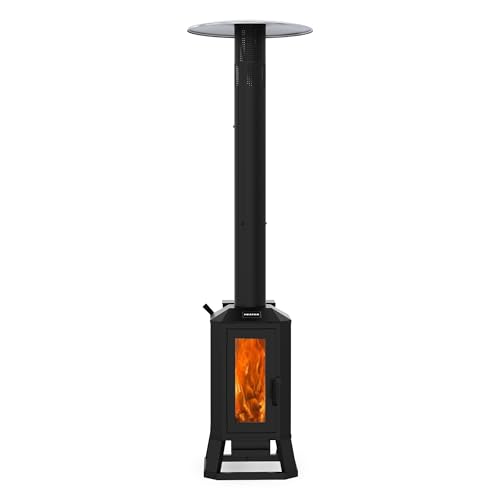
- You want a portable unit with a glass viewing window for ambiance.
- You prefer the traditional feel of a wood-burning fire with a gravity-fed hopper.
Verdict: The electric heater suits those who want clean, instant heat with easy mounting. The wood pellet heater is better for large spaces needing intense, long-lasting warmth. Choose based on whether you prioritize convenience or raw heating power.
Electric vs Wood Pellet Heater Specs
Fuel Type
The DR. Infrared model relies on 220V-240V electricity. It uses carbon infrared elements to generate heat instantly without warm-up time. This means no fuel storage or handling. The HEATAK unit burns wood pellets. It features a gravity-fed system with a 20-pound hopper. You must manage pellet supplies and ash. Electric operation offers clean, odorless warmth. Wood pellet combustion provides a traditional flame experience. Your choice depends on whether you prefer plug-in convenience or fuel-based heat generation.
Heat Output
Heat capacity differs significantly between these two units. The DR. Infrared heater delivers 3,000 watts, which converts to approximately 10,260 BTU. This output is suitable for focused, localized warmth. The HEATAK wood pellet heater produces 70,000 BTU. This is nearly seven times the output of the electric model. The pellet heater claims to warm over 100 square feet. If you need to heat a large patio area, the pellet unit provides substantially more thermal energy. The electric model is better for smaller, targeted zones.
Mount Type
Installation methods vary greatly. The DR. Infrared heater is designed for wall or ceiling mounting. It includes brackets for fixed installation. This saves floor space and keeps the unit secure. The HEATAK heater is a freestanding unit. It features dual wheels for portability. You can move it easily across your patio or deck. It does not require permanent mounting hardware. If you want a fixed, space-saving solution, the electric model is superior. If you need flexibility to move the heater, the pellet unit wins.
Weather Resistance
Outdoor durability is a key specification. The DR. Infrared heater has an IP55 weatherproof rating. This protects it from dust and water jets, making it suitable for covered patios or garages. The HEATAK heater is constructed from powder-coated steel with a high-temp black coating. It is built for rugged outdoor use. However, the data does not list a specific IP rating for the pellet heater. You must assume the steel body provides weather resistance. The electric model has a certified protection rating for wet environments.
Features
Control and usability features differ. The DR. Infrared heater includes a remote control. You can switch between power levels or standby mode from a distance. It also has automatic shut-off and overheat protection for safety. The HEATAK heater requires manual ignition with a match or lighter. It lacks a remote control. It does offer a glass viewing window to see the flames. The electric model offers more automated control and safety features. The pellet heater offers visual ambiance but requires manual operation.
Which Patio Heater Fits Your Setup
You want instant heat with no fuel hassle
This electric unit delivers 3000W of infrared heat instantly. You get warmth without waiting for a flame to catch. The IP55 weatherproof rating protects it from rain. You can mount it on walls or ceilings to save floor space. The included remote lets you adjust settings from a distance. There are no fumes or odors to worry about during use.
You need maximum warmth for a large area
This wood pellet heater outputs 70,000 BTU. That power covers over 100 square feet of outdoor space. The gravity-fed hopper holds 20 pounds of pellets for consistent heat. You do not need to plug it in. The steel construction ensures durability. The glass viewing window adds ambiance while you enjoy the strong thermal output.
You prefer silent operation and clean air
Electric infrared heaters run silently with no moving parts. You avoid the noise of combustion fans or crackling wood. The carbon element produces clean heat without smoke or ash. This makes it safe for covered patios or garages. The overheat protection adds a layer of safety. You get reliable warmth without managing fuel or dealing with residue.
Quick picks
| # | Product | Best for | Price |
|---|---|---|---|
| 1 | DR. Infrared 41-Inch 3000W Patio Heater | covered patios with 240V power | Check price of DR. Infrared 41-Inch 3000W Patio Heater on Amazon |
| 2 | HEATAK 70K BTU Wood Pellet Patio Heater | large outdoor spaces needing high heat output | Check price of HEATAK 70K BTU Wood Pellet Patio Heater on Amazon |
The products compared

DR. Infrared 41-Inch 3000W Patio Heater
Best for: covered patios with 240V power
- Fuel Type
- Electric (what this guide is about)
- Heat Output
- 10,260 BTU
- Wattage
- 3000W
- Mount Type
- Wall or Ceiling Mount
- Heating Element
- Carbon Infrared
- Weatherproof Rating
- IP55
View on Amazon: DR. Infrared 41-Inch 3000W Patio Heater Affiliate link
This electric infrared heater delivers 3000W of power, translating to 10,260 BTU of heat. It features a carbon element and an IP55 weatherproof rating, making it suitable for outdoor patios or indoor workshops. The unit mounts to walls or ceilings and includes a remote control for adjusting settings. Its compact, slim design fits spaces where traditional heaters might not.
Pros
- 3000W output for instant heat
- IP55 weatherproof rating for outdoor use
- Includes remote control for operation
- Wall or ceiling mount options
Cons
- Requires 220V-240V power supply
- Heavier than portable electric units
- Limited to infrared heating method
Good fit if
- You need a permanent outdoor heat source
- You have access to 240V power
- You want silent, odorless operation
Skip if
- You only have standard 120V outlets
- You prefer radiant heat from flames
- You need portable plug-in units
Verdict: Dr. Infrared 3000W Infrared Heater provides focused, efficient warmth for covered outdoor areas or workshops. It suits users who have dedicated 240V circuits and want a fixed, low-maintenance heating solution.
HEATAK 70K BTU Wood Pellet Patio Heater
Best for: large outdoor spaces needing high heat output
- Fuel Type
- Wood Pellet (what this guide is about)
- Heat Output
- 70,000 BTU
- Ignition Type
- Match or lighter
- Construction Material
- Powder-Coated Steel
- Features
- Wheels
- Color
- Black
View on Amazon: HEATAK 70K BTU Wood Pellet Patio Heater Affiliate link
This HEATAK wood pellet heater delivers 70,000 BTUs to warm over 100 square feet. It uses a gravity-fed system with a 20-pound hopper for consistent heat. The powder-coated steel body includes a glass viewing window for ambiance. Weighing 40 pounds with dual wheels, it is portable. It requires manual ignition with a match or lighter. This unit suits those seeking high output and visual appeal.
Pros
- 70,000 BTU heat output
- 20-pound gravity-fed hopper
- Glass viewing window
- Dual wheels for portability
Cons
- Manual ignition required
- Large footprint at 80.1 inches tall
- Heavy at 40 pounds
Good fit if
- You want high heat output for large spaces
- You prefer the ambiance of a visible flame
- You have space for a tall unit
Skip if
- You need automatic ignition
- You have limited vertical clearance
- You prefer electric simplicity
Verdict: HEATAK 70,000 BTU Wood Pellet Heater fits users who prioritize raw heat power and visual flame appeal over automatic convenience. It is a robust option for spacious patios where manual ignition is acceptable.
Specifications side by side
| Spec | DR. Infrared 41-Inch 3000W Patio Heater | HEATAK 70K BTU Wood Pellet Patio Heater |
|---|---|---|
| Fuel Type | Electric | Wood Pellet |
| Heat Output | 10,260 BTU | 70,000 BTU |
| Wattage | 3000W | not stated |
| Mount Type | Wall or Ceiling Mount | not stated |
| Heating Element | Carbon Infrared | not stated |
| Weatherproof Rating | IP55 | not stated |
| Ignition Type | not stated | Match or lighter |
| Construction Material | not stated | Powder-Coated Steel |
| Features | Remote Control | Wheels |
| Use | Commercial Use | not stated |
| Water Resistance Rating | IP55 | not stated |
| Color | Black | Black |
| Dimensions | 41.2 × 3.4 × 5.9 inches | 28.5 × 80.1 × 21.1 inches |
| Weight | 7.6 pounds | 40 pounds |
| Size | 41.2 Inches | Large |
| Model | DR-239 | CSL500 |
Frequently asked questions
Do electric patio heaters work in the rain?
Yes, if they have a sufficient water resistance rating. The DR. Infrared model features an IP55 rating, which protects it from low-pressure water jets. This makes it suitable for covered patios where it might encounter direct rain or splashing. Always check the specific IP code to ensure it matches your local weather conditions.
How much space does a wood pellet heater take up?
Wood pellet heaters are generally larger and heavier than electric units. The HEATAK model measures 80.1 inches in width and weighs 40 pounds. It is designed for large outdoor spaces where its footprint is acceptable. You need to ensure you have enough floor space to accommodate its substantial dimensions safely.
Can I mount an electric patio heater on the ceiling?
Yes, many electric infrared heaters are designed for ceiling mounting. The DR. Infrared unit is explicitly listed as ceiling-mounted. This saves floor space and directs heat downward efficiently. It is ideal for covered areas where you want a fixed, low-maintenance heating solution without cluttering the ground level.
Is a remote control necessary for outdoor heaters?
It is not necessary, but it adds convenience. The DR. Infrared heater includes a remote control, allowing you to adjust settings from a distance. This is useful for commercial use or large patios where walking back to the unit is inconvenient. It simplifies operation without requiring manual interaction.
Which heater is better for a small covered patio?
The electric infrared model is often better for smaller, covered spaces. It provides focused warmth and does not require the large footprint of a wood pellet unit. The DR. Infrared heater is compact at 7.6 pounds and mounts to the ceiling. This keeps the floor clear and directs heat exactly where you need it.
Do wood pellet heaters require a special power outlet?
They do not require high-voltage circuits like electric heaters. The HEATAK wood pellet heater burns fuel rather than drawing significant power. However, it may need standard electricity for ignition or fans. It is best for large outdoor spaces where you prioritize raw heat output over electrical infrastructure constraints.